Maui > Activities > Whale Watching

Maui Whale Watch Tours
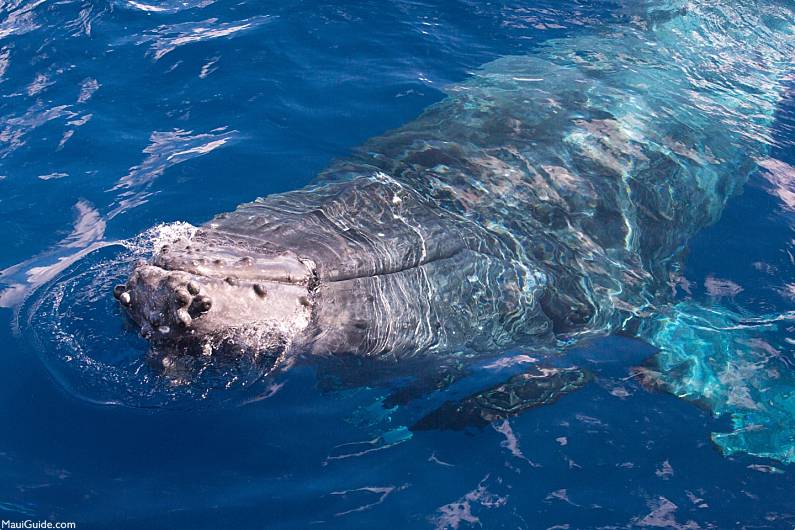
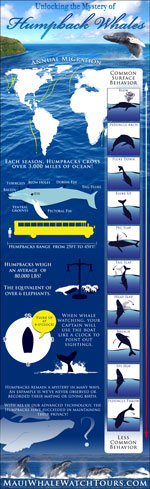
Maui County is world-famous as the destination for the Pacific Northwest humpback whales. Their migration crosses 3,100 miles of ocean each season. The humpback whale season in Maui lasts from November to May of every year. These huge mammals travel between 3 and 9 mph at over 1,000 miles per month without stopping. Humpbacks make this journey in groups called pods that congregate for a couple of days at a time. The pods stay together loosely and break apart, with the exception of the calves and mothers. There are countless whale watch opportunities while on Maui.
If you’re interested in whale watching in Maui, choose from this Maui Whale Watching Directory.
Humpback Whale Behavior
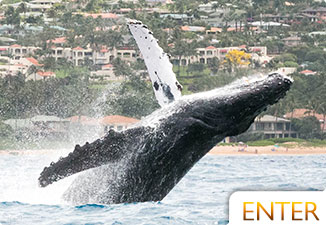
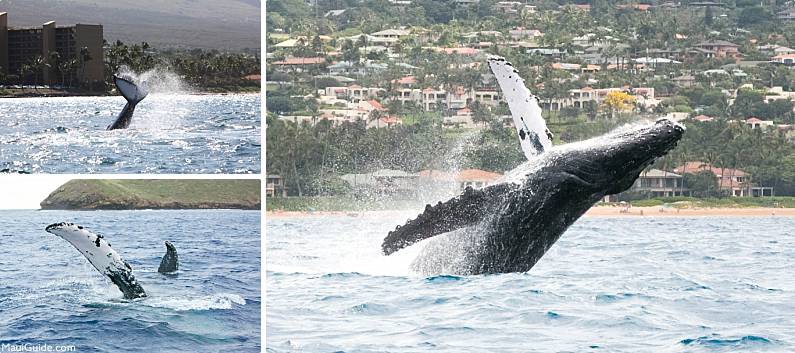
The exciting surface behaviors of Humpback whales draw scores of whale watchers every year to Maui. From lobtailing, head-slapping, spy hopping, and pectoral slaps, Humpbacks are well known for giving us all a show. The most spectacular whale activity in the winter months around Maui is the whale breach.
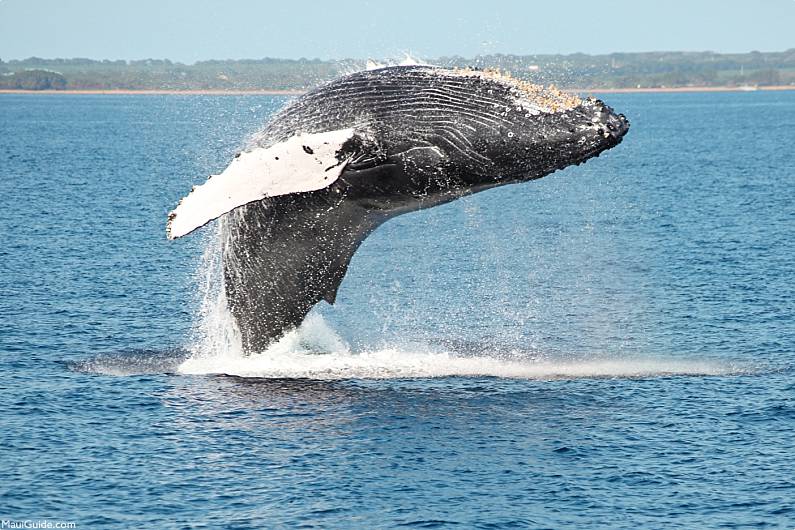
A whale breach is when the Humpback launches 3/4 of the way out of the water and comes back down with an enormous crash. Some believe that they do this to knock off surface skin parasites, and others believe it’s a social behavior.
The most common belief is that they breach for fun. This is obviously the best answer when you see how often the newborn Humpback calves partake in the activity. If you plan on going on a whale watch tour in Maui, you most likely will see a breaching whale. At the very least you’ll witness some other exciting surface activity. See our recommended tour for whale watching in Maui.
Humpback Whale Information
 Dr. Adam Pack recently proved that Humpback whales can dive depths of 1,000 feet, depths that they reach even in Maui. The longest downtime was clocked at 55 minutes in Southeast Alaska. Competitive groups have been observed at 21 knots in 2007 for more than 20 minutes. The North Pacific humpback whale population is estimated at more than 20,000. Globally, the estimate was around 100,000 until whalers dramatically lowered the numbers. They reside in the North Pacific, Southern Hemisphere, and North Atlantic. With such small numbers, the humpback is endangered and has special laws to protect its species from extinction. You’ll notice these laws in effect when on whale watching tours in Maui. Boats are not allowed within 100 yards of any humpback whales. The only exception is if the boat’s engine is turned off, and the whale comes to the boat. Some vessels have been known to be stuck for hours in one spot due to a curious humpback whale. This can be an incredible experience unless you’re in a hurry. But if you’re in a hurry, you came to the wrong island.
 Humpback Whales are known as some of the most fascinating of all the whales worldwide. They live on average 45-50 years and can give birth every 1-3 years. The gestation period lasts from 11-12 months long, making the annual migration to Maui, Hawaii perfectly timed. They travel to Maui County to give birth or mate. The newborn calf can swim in the first 30 minutes after being born. The calves are the length of their mother’s head when born. Big mom, big calf. Big Momma, on Lahaina side is nearly 60 feet long. Her calf would be 20 feet (length of her head, also long as her tail is wide) at birth and would weigh 2 tons (the same as her tongue). Calves are seen as small as just over 10 feet with a young mother. Those babies would weigh approximately 1 ton.
 After its birth, the calf will stay with its mother sometimes for around a year while drinking over 100-130 gallons of thick whale milk per day gaining about 100 pounds daily. Weaning from the mother begins around 6 months after birth. Humpback Whale Calves reach fluke maturity at around 1 year of age, sexual maturity around 5 years if female, and 7 years if male. The birthing process is somewhat of a mystery to us because no human has ever witnessed it. The whale life span is really unknown, though a new study on Bowhead whales proved that they can live more than 200 years. (That is of course if whalers and fast boats don’t get them first.)
 These highly developed creatures have elaborate songs that evolve from year to year. Each year, the male whales will sing songs all over the world. Each population sings its own song. North Pacific, Southern Hemisphere, and Eastern seaboard humpback whales all sing their OWN songs. But all whales within their group sing the same song. See: Dr. Jim Darling, Maui studies.
When the next year comes, the humpbacks will have created a new song. Humpback whales are the most imaginative, loudest, and hold the largest range of frequencies with their music than any other whale species, even topping Mariah Carey.
 Maui Humpback whales hunt together with different strategies of rounding up plankton. They eat around 5000 lbs of krill, plankton, and small fish per day. According to Dr. Fred Sharpe, the large whales in the North consume about 1-2 tons daily of capelin, sand lance, herring, scad, sardines, and small salmon. The smaller animals eat krill (Euphausid shrimp).
When in cold waters, humpbacks eat seasonally for approximately 120 days of each year. In Maui, the warm waters do not allow for this type of prey to live. This being said, with Maui’s shallow warm waters, it’s a possibility that humpback whales would be permanent residents if it weren’t for the lack of food.
Can you blame them?
Special thanks to Katie Grove-Velasquez for her research and educated insight.
Private Maui Whale Watch Tour
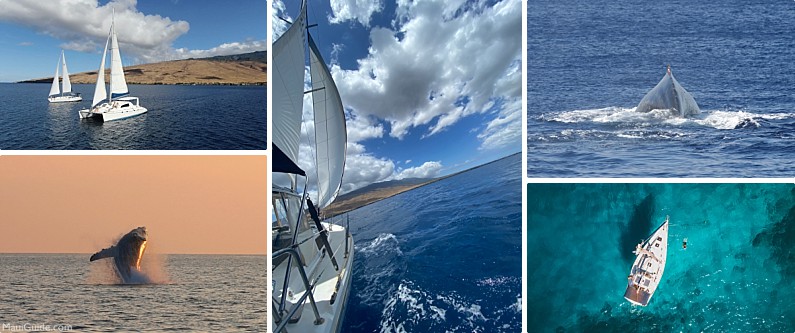
Whale watch tours are plentiful on Maui, but for a more private experience, you can charter your own private sailboat with Maui Custom Charters. Aboard the S/V Nova, a 42’ Catalina MKII, or the S/V Artemis, a 47′ Leopard sailing catamaran, you’ll sail with a seasoned crew who are familiar with Maui’s waters and knowledgeable of the humpback whales that make their homes here every winter. Maui Custom Charters captains and crew pride themselves on maximizing your sailing experience while looking for whales. Tours start at two hours and can accommodate up to six guests, we suggest adding hours for an even better experience.
Lanaʻi Shipwreck and Snorkel Tour
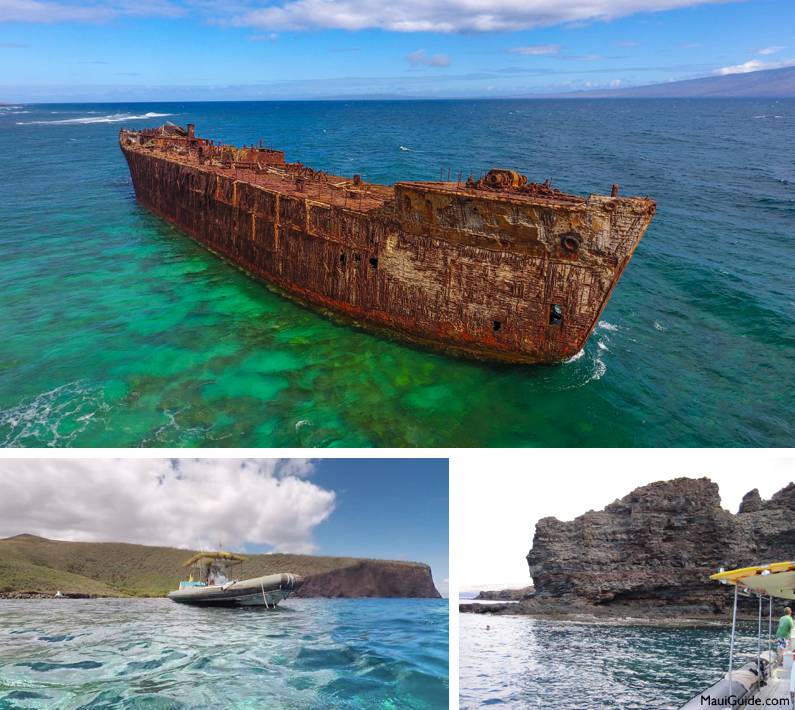
On the isolated northern coast of Lanaʻi, a rusting hull of an old Navy tanker sits marooned on the reef alongside at least a dozen other wrecks. To see this ghostly sight, visitors can either navigate through the unpaved 4×4 roads to this desolate area of Lanaʻi or hop aboard a full sailing tour with Island Star Excursions. Prepare for a beautiful ride across the ʻAuʻau Channel aboard one of their luxury private yacht. Along the way, you’ll stop at snorkel spots, watch for dolphins, and take in captivating views of Maui and Lanaʻi. The shipwreck tour runs seasonally from April to December, but the Island Star also hosts other Lanaʻi tours year-round tours!
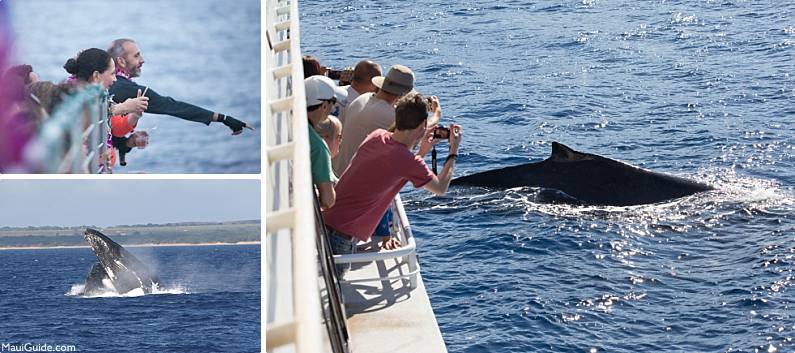
Feeling the need for speed? Maui Adventure Cruises can get you to this isolated wonder in a jiffy. Offering private tours from Lahaina Harbor, Maui Adventure Cruises utilizes agile, large-hulled rafts for all their excursions. These bad boys are speedy but ultra-stable and can plow through the Auau Channel like a tank. And since the seating is closer to the ocean than other vessels, there’s the chance of getting up-close-and-personal views of whales, turtles, and dolphins. If a private tour isn’t in the cards, Maui Adventure Cruises also hosts group snorkel tours to Lanai.
What Camera should I use?
We suggest shooting with something that has a fast shutter speed. Make sure your settings allow for multiple photos at once. Using a camera that is slow to take a picture will leave you with a whole lot of photos of plain ocean. A zoom lens can be nice on a flat day, but when things are bumpy, you might want something else.
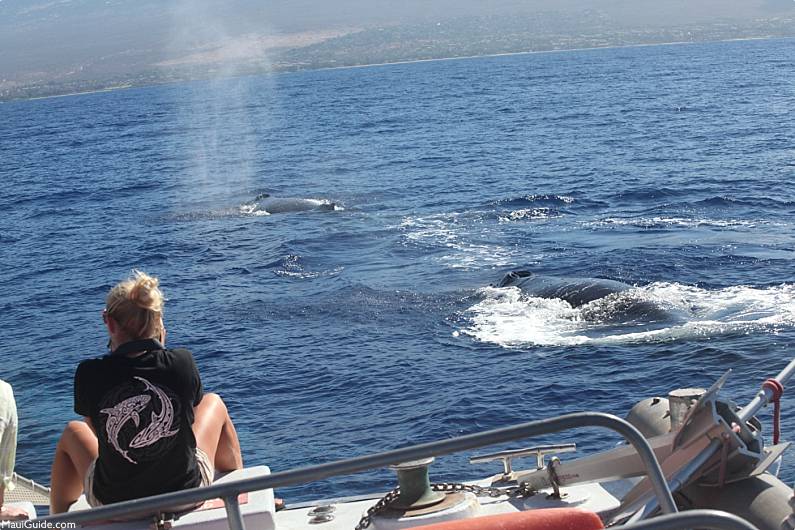
Whales come out of nowhere and are sporadic with their surface activity. Find a steady spot near a railing and be ready at all times. We find that whales breach when we’re least ready for them.
If you’re shooting from the shore, we recommend being higher up. There are plenty of cliff views along the Pali (winding cliff road between Lahaina and Maʻalaea.)